Storytelling as a Bridge to Care: A Storytelling Blueprint for Ada Health
The Storytelling Blueprint is the main project in Johns Hopkins University's Introduction to Storytelling course. It treats the storyteller as an architect: a story campaign needs a foundation before its building blocks, and building blocks before the finished structure. The blueprint is a single working document, developed over the semester in three stages:
Story Brief. The foundation. It covers the background of a real organization and how that organization has used storytelling, its mission, a profile of the target audience and a defined call to action.
Story Elements. The building blocks. Two stories are mapped by hook, character, narrative structure, emotional arc, conflict, transformation and authenticity, and one is written in full.
Final Storytelling Portfolio. The finished structure. It includes both stories in full, a personal story built on archetypes, a transmedia strategy, an immersive storytelling experience and criteria for measuring impact.
Every decision in the blueprint must be backed by research and storytelling theory.
The Organization: Ada Health
Ada Health is a free AI symptom-assessment app with roughly 14 million users in 150 countries. Its stated mission is to make healthcare accessible to everyone (About Ada, 2025). In the United States, however, its public communication has been limited to corporate announcements. Its social media has been dormant since December 2024, and its main use of narrative has been a single testimonial video. Stories increase audience engagement by stimulating brain activity (Grall et al., 2021). That makes a story-driven awareness campaign a logical way for the organization to reconnect with its audience.
The campaign targets uninsured Americans, roughly 27 million people (Bunch & Ketema, 2025). Most cite cost as the reason they lack coverage, and many delay or skip medical care as a result (Tolbert et al., 2023). Uninsured people rely on the internet for health information despite trusting it little. They place much higher trust in healthcare providers and interpersonal sources (Furtado et al., 2016). A free app with content curated by doctors and support for multiple languages addresses this gap directly.
Storytelling Elements and Their Research Basis
American Indian/Alaska Native and Hispanic populations have the highest uninsured rates in the U.S. (KFF, 2025), so the campaign centers on characters from these communities. Clara is a teenage daughter of Hispanic immigrants in Oregon. Mya is a young woman from the Navajo Nation in New Mexico. Each element of the two stories rests on established storytelling research:
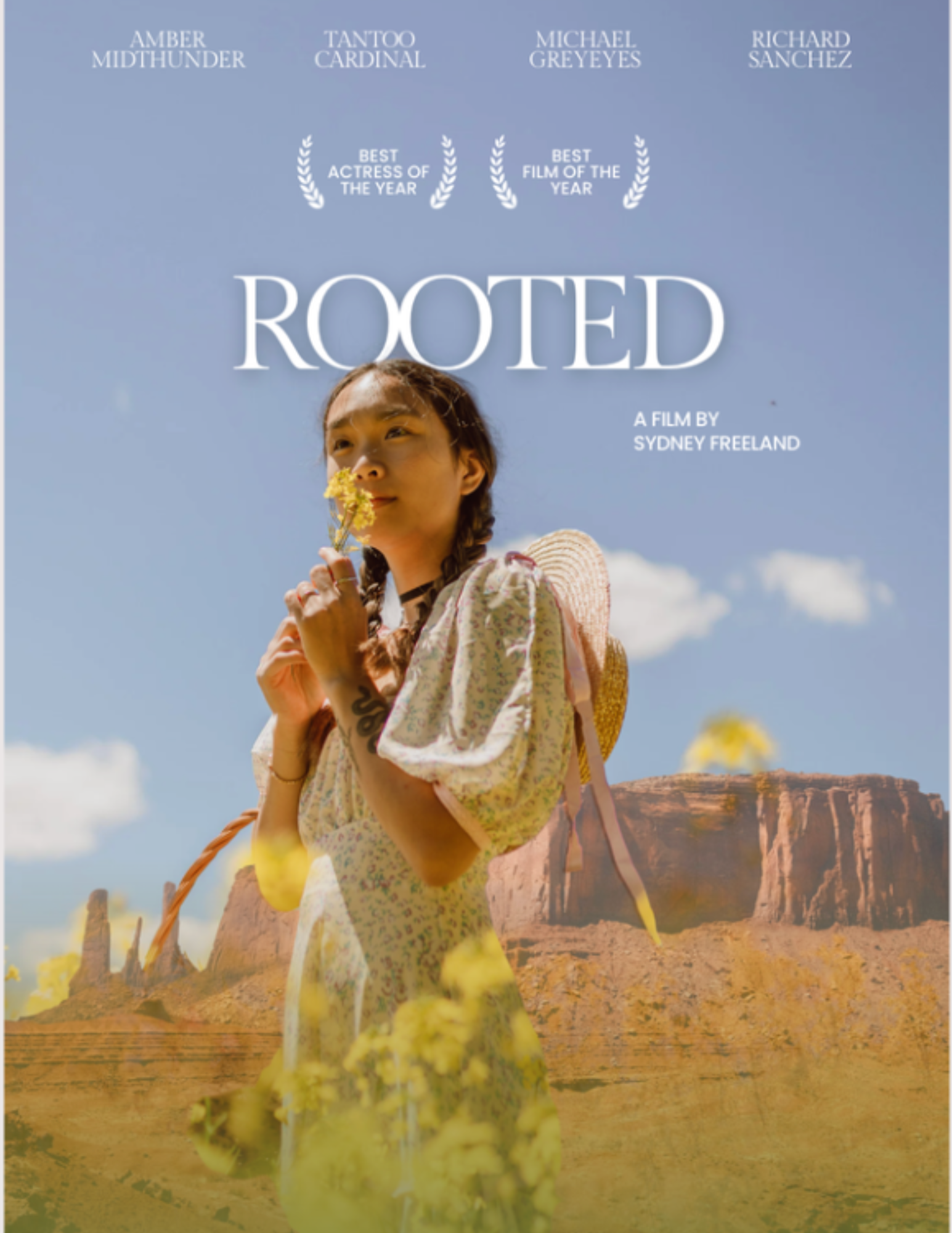
Hook. An effective hook transports the audience into the story. Green (2008) calls this narrative transportation: an immersive state in which audiences become more open to a story's message. Clara's story opens with tension, as she overhears her parents arguing in Spanish. Mya's story opens with an image: the dry, desolate landscape of Ojo Encino.
Relatable character. Audiences invest in characters who have weaknesses and face both external and internal conflict (Cron, 2021). Clara is a skilled language broker for her family until she meets medical terminology she cannot translate. Mya reaches a prestigious university just as her health begins to fail. Because AI tools require digital literacy (Lee, 2025), both characters are Gen Z, matching Ada Health's likely users.
Narrative drive. Withholding key information creates a mystery the audience wants solved (Moin, 2024). Clara does not know at first why her parents are fighting.
Narrative structure. Clara's story follows Freytag's Pyramid: exposition, rising action, climax, falling action and resolution. Mya's story follows Campbell's Hero's Journey of departure, initiation and return, mapped onto Luhn's (2018) six story stages. The Hero's Journey connects across cultures because it draws on emotions common to all people (Vogler, 2017).
Customer as hero. Customer-centric business storytelling casts the customer as the hero and the brand as the mentor (Moin, 2024). Ada Health supports the characters' journeys rather than starring in them. Both plots follow the "Overcoming the Monster" pattern, in which a character confronts an opposing force and fights to survive and thrive (Choy, 2023).
Transformation. In both stories, Ada Health is the catalyst for change, the breakthrough that moves each character from struggle toward access to care and peace of mind. Clara goes from a powerless, worried teenager to a confident problem-solver. Mya goes from a student to an entrepreneur working on health inequity in her community.
Authenticity. Authenticity is the foundation of organizational storytelling (Forman, 2013). Both stories are set in real places and grounded in documented realities. Clara's role reflects language brokering, a common dynamic in immigrant families in which children act as linguistic and cultural mediators for their parents (Narchal & Hembrow, 2024). Mya's story reflects real conditions in the Navajo Nation, including food deserts and high rates of diabetes (Sundberg et al., 2020), and draws on the author's 2007 visit there. Plausible stories are more persuasive (Valsesia et al., 2017). Both stories also follow two of Luhn's (2018) universal themes: love and belonging, and awareness and understanding.
Medium. Animation improves viewer attention and conceptual understanding (Praveen & Srinivasan, 2022) and works well in health and education (Chanakya, 2024). For that reason, Clara's story is a bilingual animated short. Films and documentaries can spark public discussion of healthcare and education (Reigada et al., 2019), and external narrative sources come across as more credible (Keel & Tran, 2023). For that reason, Mya's story is a short film, Rooted.
The full blueprint extends these stories into a transmedia campaign across Ada Health's website, social media, Spanish-language outlets and film festivals. It also suggests an interactive game, "Help Clara Save Her Father," in which players experience the app through Clara's eyes.
Storytelling as a Bridge to Care
For people who go without care because of cost, language or distance, information alone rarely changes outcomes. Trust does. The uninsured place far more confidence in providers and people they know than in what they find online (Furtado et al., 2016). Storytelling can close that distance. Narrative transportation makes audiences more receptive to a message (Green, 2008), and authentic, plausible characters make it feel credible and personal (Forman, 2013; Valsesia et al., 2017). When people in need see their own families, languages and communities on screen, a resource stops being abstract and becomes a realistic next step. Clara and Mya are fictional, but the barriers they face are real. So is the power of a well-built story to guide people toward the help they need.
This campaign was developed for a graduate course and is not affiliated with or endorsed by Ada Health.
Want to share your work?
The Splendid Torch Society features research, projects and stories that explore how people connect, grow and thrive. If you have a paper, project or idea you'd like to share, we'd love to hear from you.
References
About Ada. (2025, April 25). Ada. https://about.ada.com/about-us/about-ada/
Bunch, L. N., & Ketema, H. (2025). Health insurance coverage in the United States: 2024 (Current Population Reports P60-288). U.S. Census Bureau. https://www2.census.gov/library/publications/2025/demo/p60-288.pdf
Chanakya C. N, C. (2024). Animation for social impact: Visual storytelling in health, education, and activism. Journal of E-Science Letters, 5(3), 1–2. https://doi.org/10.51470/esl.2024.5.3.01
Choy, E. (2023). Let the story do the work: The art of storytelling for business success. Amacom.
Cron, L. (2021). Story or die: How to use brain science to engage, persuade, and change minds in business and in life. Ten Speed Press.
Forman, J. (2013). Storytelling in business: The authentic and fluent organization. Stanford University Press.
Furtado, K. S., Kaphingst, K. A., Perkins, H., & Politi, M. C. (2016). Health insurance information-seeking behaviors among the uninsured. Journal of Health Communication, 21(2), 148–158. https://doi.org/10.1080/10810730.2015.1039678
Grall, C., Tamborini, R., Weber, R., & Schmälzle, R. (2021). Stories collectively engage listeners' brains: Enhanced intersubject correlations during reception of personal narratives. Journal of Communication, 71(2), 332–355. https://doi.org/10.1093/joc/jqab004
Green, M. C. (2008). Transportation theory. In W. Donsbach (Ed.), The international encyclopedia of communication. Wiley. https://doi.org/10.1002/9781405186407.wbiect058
Keel, A. L., & Tran, A. T. K. (2023). Increasing small nonprofits' influence through strategic storytelling. Business Horizons, 66(3). https://doi.org/10.1016/j.bushor.2023.01.004
KFF. (2025, February 13). Health coverage by race and ethnicity, 2010–2023. https://www.kff.org/racial-equity-and-health-policy/health-coverage-by-race-and-ethnicity/
Lee, N. T. (2025, September 19). Why AI readiness requires digital literacy and inclusion. Brookings. https://www.brookings.edu/articles/why-ai-readiness-requires-digital-literacy-and-inclusion/
Luhn, M. (2018). The best story wins: How to leverage Hollywood storytelling in business and beyond. Morgan James Publishing.
Moin, S. M. A. (2024). Storytelling in marketing and brand communications. Taylor & Francis.
Narchal, R., & Hembrow, R. (2024). Hidden care: A qualitative exploration of the roles and responsibilities of language brokers. International Journal of Qualitative Studies on Health and Well-Being, 19(1). https://doi.org/10.1080/17482631.2024.2371536
Praveen, C. K., & Srinivasan, K. (2022). Psychological impact and influence of animation on viewer's visual attention and cognition: A systematic literature review, open challenges, and future research directions. Computational and Mathematical Methods in Medicine, 2022, 8802542. https://doi.org/10.1155/2022/8802542
Reigada, C., Martín-Utrilla, S., Pérez-Ros, P., Centeno, C., Sandgren, A., & Gómez-Baceiredo, B. (2019). Understanding illnesses through a film festival: An observational study. Heliyon, 5(8), e02196. https://doi.org/10.1016/j.heliyon.2019.e02196
Sundberg, M. A., Warren, A. C., VanWassenhove-Paetzold, J., George, C., Carroll, D. S., Becenti, L. J., Martinez, A., Jones, B., Bachman-Carter, K., Begay, M.-G., Wilmot, T., Sandoval-Soland, H., MacKenzie, O., Hamilton, L., Tsosie, M., Bradburn, C. K., Ellis, E., Malone, J., Pon, J., & Fitch, A. (2020). Implementation of the Navajo fruit and vegetable prescription programme to improve access to healthy foods in a rural food desert. Public Health Nutrition, 23(12), 2199–2210. https://doi.org/10.1017/s1368980019005068
Tolbert, J., Drake, P., & Damico, A. (2023, December 18). Key facts about the uninsured population. KFF. https://www.kff.org/uninsured/key-facts-about-the-uninsured-population/
Valsesia, F., Diehl, K., & Nunes, J. C. (2017). Based on a true story: Making people believe the unbelievable. Journal of Experimental Social Psychology, 71, 105–110. https://doi.org/10.1016/j.jesp.2017.03.001
Vogler, C. (2017). Joseph Campbell goes to the movies: The influence of the hero's journey in film narrative. Journal of Genius and Eminence, 2(2), 9–22. https://doi.org/10.18536/jge.2017.02.2.2.02

About the Author
Jussarang Lee is a health communication strategist and multimedia storyteller. She holds an M.A. in Communication from Johns Hopkins University, where she studied how storytelling can humanize complex health and technological issues. That focus has taken her from documenting frontline humanitarian missions with Médecins Sans Frontières to directing communications for medical AI, and co-founding StoryLab, a student storytelling community at Hopkins. Based in New York City, she’s putting that research into practice. She produces digital media campaigns for global health initiatives and is working to help mission-driven organizations turn vital science into stories that connect.